Hear our latest Podcast

CYCLONE -
The Coiling Snack in the Ocean
The name which we have been vibed all over the country and making its move once again to us;
WHAT IS CYCLONE??
The term Cyclone is derived from the Greek word “Cyclos” which means coiling of the snake. Cyclones are created by atmospheric disturbances around a low-pressure area. Cyclones are usually accompanied by violent storms and severe weather conditions. Basically, tropical cyclones are deep low-pressure areas.
TYPES OF CYCLONES
There are two types of cyclones
1. Tropical Cyclones.
2. Extra Tropical Cyclones - An extratropical cyclone (also called a mid-latitude cyclone) is a type of cyclone. It is a large low-pressure weather area with clouds, rain and heavy wind. They occur in areas that are between latitudes 30° – 60° from the equator.
Cyclones are basically formed in oceans in an average of 9 per year and being named but the cyclones are lot more formed but not being named because of its efficiency which requires of Speed of wind which is calculated in Nautical miles and it should reach a minimum 34 Nautical Miles which we call it as 74 km/hr of wind speed, and after it reaches the efficiency it will lead to classify it as one of its kind - CYCLONE or HURRICANE or TYPHOON once its classified its naming process will start to burn up.
NAMING OF CYCLONES
We must have always wondered how cyclones get their names.
Do they are named after the formation or before its predicted to be, likewise we had a thought that these are named based on their coordinates and geographical aspects. But we came to know some awesome facts and procedures that are being followed in naming a cyclone. The Name CYCLONE has different names at its existence in the various places of the earth likewise;
#TYPHOON is being called a Cyclone in Western Northern Pacific.
#HURRICANES is being called as Cyclone in Eastern and Central North Pacific & North Atlantic (including Caribbean and Gulf of Mexico)

Tropical Cyclones are generally most powerful and effective in the areas like Arabian Sea/Northern Indian Ocean; South Indian Ocean; Coral Sea/South Pacific.
Every state and the country has its own Meteorological department which gives the daily updates of weather conditions and predictions, Likewise Many countries have signed a memorandum or letter of understanding to Form a Union or superior organisation for Meteorological science which gives extensive and more clear information of weather. After a Long discussions a a Non Governmental Organisation named The International Meteorological Organisation was formed by a group of people including officials of different countries, Later on it was superseded by World Meteorological Organisation an Intergovernmental organisation which plays a Major Role in Climate, Disasters and its naming and many more decisions regarding it.
At Worldwide Tropical Cyclones Naming is classified into 10 categories based on their Geographical area under the supervision of
- Caribbean Sea, Gulf of Mexico and the North Atlantic Names.
- Eastern North Pacific Names.
- Central North Pacific Names.
- Western North Pacific and the South China Sea Names.
- Australian Tropical Cyclone Warning Centre's (TCWC) Area of Responsibility.
- Regional Specialised Meteorological Centre Nadi's Area of Responsibility.
- Port Moresby Tropical Cyclone Warning Centre's Area of Responsibility.
- Jakarta Tropical Cyclone Warning Centre's Area of Responsibility.
- Northern Indian Ocean Names - Arabian Sea and the Bay of Bengal.
- Southwest Indian Ocean Names.
India and its neighborhood countries falls under Northern Indian Ocean Names - Arabian Sea and the Bay of Bengal. IMD, one of the six Regional Specialised Meteorological Centres (RSMC) in the world, is mandated to issue advisories and name tropical cyclones in the north Indian Ocean region. The advisories are issued to 13 member countries under WMO/UNESCAP (UNITED NATIONS ECONOMIC AND SOCIAL COMMISSION FOR ASIA AND THE PACIFIC) Panel including Bangladesh, India, Iran, Maldives, Myanmar, Oman, Pakistan, Qatar, Saudi Arabia, Sri Lanka, Thailand, United Arab Emirates and Yemen.


The above depicted images indicates the Names of the Cyclones which are to be named successively for the cyclones which are formed in the respective Geographical Areas.
NIVAR CYCLONE
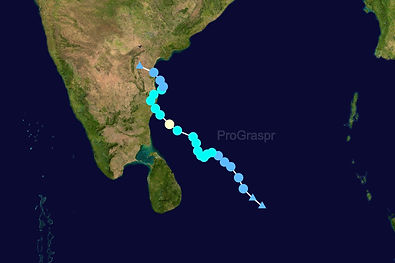
According to the India Meteorological Department (IMD), Cyclone Nivar(Name given by Iran), which crossed the TN coast as a very severe cyclonic storm with wind speeds of 120 kmph and rain-filled, further weakened as it moved inland.The storm system had moved northwestwards and weaken into low pressure. Subsequently, Cyclone Nivar weakened into a cyclonic storm and further into a deep depression, centered about 50 km west-southwest of Tirupati.Cyclone Nivar is the second cyclone to form over the Bay of Bengal this year after Super Cyclone Amphan.
The Indian Army of Dakshin Bharat Area Headquarters which had positioned 22 rescue teams in Puducherry, Chennai and Tiruchirappalli helped clear uprooted trees on the arterial roads following landfall.
Cyclone NIVAR has caused lots of damage in Tamil Nadu and Puducherry.
TAMILNADU
Several roads were closed in CHENNAI due to water logging which made people to suffer a lot while travelling in Vehicles. Due to intense rainfall, Chembarabakkam lake have released water for the first time after 5 years.Many areas including Madipakkam, Velachery, Adambakkam and suburbs around Tambaram and low lying regions along the river Adyar were flooded. The Greater Chennai Corporation removed 500 uprooted trees from 223 roads. However it is reported that flood water has entered nearly 40,000 homes within the border. So far 5 have been reported dead in Tamil Nadu.
PUDUCHERRY
Trees were uprooted, electric poles were damaged and several areas were flooded as of November 26th. The Chief Minister of Puducherry V.Narayanasamy reported that the initial loss in agriculture and other sectors was estimated at ₹4 billion (US$54.2 million).
Heartfelt condolences to the people who had lost their lives in this cyclone. Special Kudos to both Tamil Nadu and Puducherry Government for handling this cyclone with immense cautiousness and care.
CONCLUSION
Cyclone can damage your life severely but overtime it will get better, and it can be formed from a simple thunderstorm then gradually draw more energy to itself to attain the name Tropical Cyclone a deadly natural disaster/hazard like bushfires or floods. The interesting bit of all is that from a simple thunderstorm you need cooperation from both the ocean and the atmosphere to form a complete Tropical Cyclone which is deadly no matter where it is because if it is in the ocean there will be big waves cause by this hazard and if it were in a continent with people nearby the wind which is fast will cause great damage to everything around it.
Cyclone is natural disaster which cannot be stopped by any force. Just we need to protect ourselves and follow to the guidelines which is instructed by the government in this times. It does not cause that much damage expect to those people who live in coastal areas. That too if they listen to government they will be safe and for others a hot coffee and some time with family will do the thing.
“The whole world is a cyclone. But once you have found the center, the cyclone disappears. This nothingness is the ultimate peak of consciousness”. - Rajneesh